
Researchers know failed results matter. Almost none are shared.
- 98%of researchers say null results have value
- 30%have ever submitted one to a journal1 — and fewer still are published
Every lab runs experiments that don't work: the antibody dilution that gave no signal, the hypothesis that didn't hold, the study that stopped when the student left. That knowledge stays in notebooks and hard drives, and the next lab pays to find it out again.
The cost: irreproducible research and failing trials
When Amgen tried to confirm 53 landmark cancer studies, it could reproduce 6.2 Bayer found inconsistencies in about two-thirds of its target-validation projects.3 In the US alone, an estimated USD 28 billion a year is spent on preclinical research that cannot be reproduced.4
Downstream, 86% of drugs that enter clinical trials never reach approval — 97% in oncology.5 Clinical research is documented end to end: registered protocols, powered sample sizes, audited records. Preclinical research, where those drugs start, is not. Our hypothesis is that part of the clinical failure rate is preclinical evidence that was never recorded — a hypothesis nobody can test today, because those experiments were never written down.
And what is published often can't be reused
We audited 1,200 papers in cancer biology, immunology and neuroscience.6
- 4%identify their antibodies to the reporting standard
- 1 in 10staining protocols are described well enough to reproduce
- 100×range in the dilution reported for a single antibody
AI for science is learning from a fraction of the record
Models now suggest hypotheses, design studies and review papers. They learn from the published literature — and the published literature is mostly what worked.
“[LLMs] inherit the positive bias of the literature they are trained on.”
A model trained only on what worked cannot tell you what fails. The loop cannot correct itself from the inside. We need to record — and share — what actually happens at the bench.
Why I started CiteZero
I spent 15 years at the bench running experiments — days, nights and weekends. Like every researcher, I watched resources, animals and my own time go into experiments that never worked, some already tried in my own lab or the lab next door, let alone in dozens of labs around the world. I was frustrated by the reproducibility crisis and by retractions that give academia a bad name, and worried by the failure rate of clinical trials, which “bad animal models” can't fully explain. Working in academia and in biotech and pharma start-ups convinced me that much of the problem is how little of preclinical research is ever properly recorded.
And I was no better. I was terrible at keeping records, and did everything I could to avoid yet another tool for logging experiments after running them. So I set out to build a platform with the bench researcher in mind: one that saves time instead of adding work, and gives researchers the benefits of real scientific collaboration.
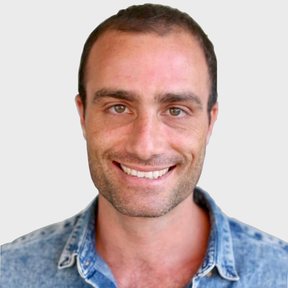
Amit Benbenishty, PhD — Founder. Neuroscientist; PhD, Tel Aviv University; postdoctoral fellowships at the Weizmann Institute of Science and King's College London; 14 peer-reviewed papers; formerly VP R&D at a neurotrauma biotech.
References
- Springer Nature. Survey of 11,069 researchers on null and negative results, 2024.
- Begley CG, Ellis LM. Raise standards for preclinical cancer research. Nature 483, 531–533 (2012).
- Prinz F, Schlange T, Asadullah K. Believe it or not: how much can we rely on published data on potential drug targets? Nat Rev Drug Discov 10, 712 (2011).
- Freedman LP, Cockburn IM, Simcoe TS. The economics of reproducibility in preclinical research. PLOS Biol 13, e1002165 (2015).
- Wong CH, Siah KW, Lo AW. Estimation of clinical trial success rates and related parameters. Biostatistics 20, 273–286 (2019).
- CiteZero audit of 1,200 papers in cancer biology, immunology and neuroscience, 2020–2026. Manuscript in preparation.
- Lee S. LLMs have made failure worth publishing. arXiv:2604.06236 (2026). Preprint, not peer reviewed.